
The Human and Monster Boundary
Vainqueur the DragonThis flow examines how the novel repeatedly destabilizes the distinction between civilized humans, monsters, demons, and Dragons.
increasing Bearing strength in each event
 decreasing
Bearing strength in each eventdecreasingThe Monster Label
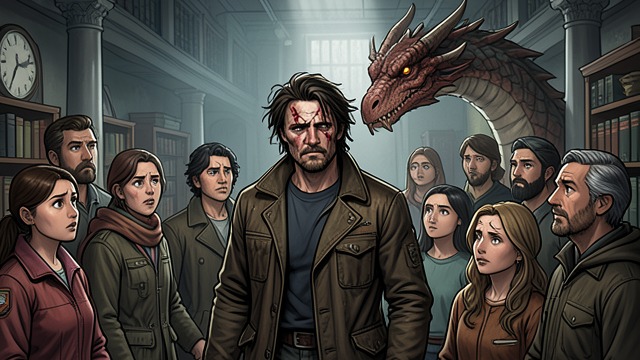
The Monster Label
Who Counts as a Monster
Vainqueur asks whether Victor Dalton self-identifies as a monster. Victor rejects the category, while Vainqueur sees it as an arbitrary label used by weaker species.
Social Classification
The question establishes that monsterhood is political as much as biological. Humans classify Dragons, Goblins, and Trolls as threats while ignoring their own violence.
The novel begins dismantling the moral certainty of species categories.
Murmurin's Community
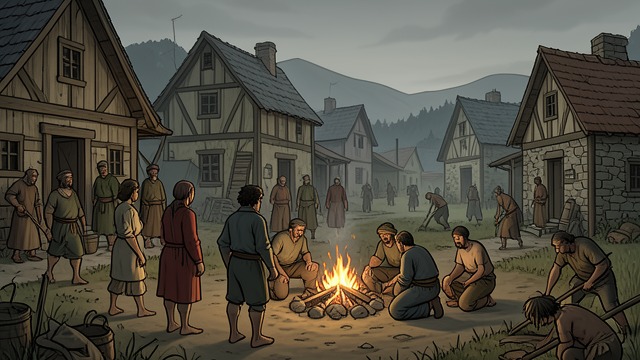
Murmurin's Community
Monsters as Neighbors
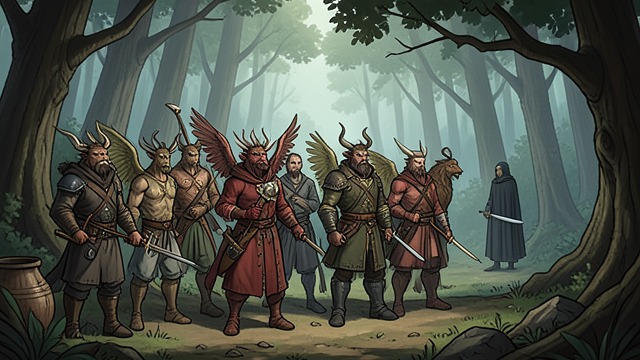
Victor Dalton finds Werewolves, Ghouls, Mimics, and Shapeshifters living together. Their society includes farming, trade, religion, education, and hidden criminal networks.
Civilization Reversed
The supposedly civilized world excludes them, while the monster settlement develops practical tolerance. Its members still prey on outsiders, but their internal relationships resemble ordinary civic life.
Murmurin makes civilization a matter of organization rather than species.
The Dragonized Minion
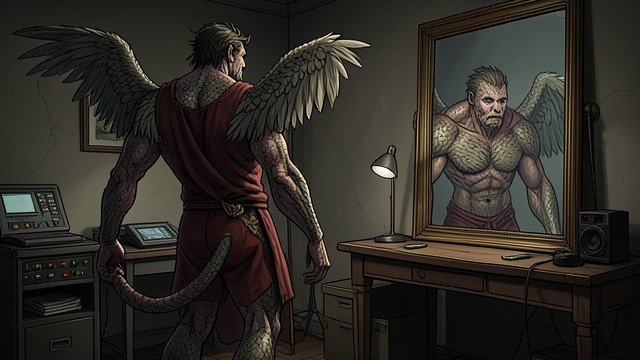
The Dragonized Minion
A New Type
Victor Dalton's Monster Knight promotion gives him wings, a tail, and a Dragon Type. His body begins to reflect the social bond that already defines him.
Embarrassment and Power
Victor resists becoming a miniature Vainqueur Knightsbane, yet the transformation improves his authority and survival. The boundary between human service and monster identity becomes physically visible.
He is no longer able to return to a simple human self.
The Moral Villain Problem
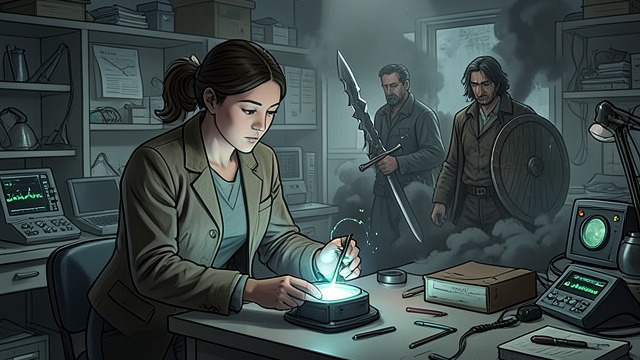
The Moral Villain Problem
Conflicting Testimonies
Kia Bekele hears that Victor Dalton and Vainqueur are either monstrous villains or destructive idiots. Their actions save communities while also causing enormous collateral damage.
Alignment as Inadequate Evidence
Kia's scans reveal neutral and good tendencies where she expected pure evil. The result does not absolve them, but it demonstrates that categories cannot capture motive, consequence, or context.
Moral judgment must remain interpretive.
The New Folk Future
The New Folk Future
Old Enemies Return
Mell Odieuse and the Fomors still regard humans, monsters, and Dragons as pollutants. Their doctrine of the Wild Hunt seeks to restore an older order through extermination.
A Hybrid World
Murmurin, Dragon adventuring, and interspecies alliances suggest that the future will not belong exclusively to Old Folk or New Folk. It will be shaped by unstable mixtures of species, magic, commerce, and technology.
The boundary conflict remains unresolved but transformed.
during Vainqueur's first meeting with Victor Dalton
during Victor's arrival in Murmurin
during the Battle of Murmurin
during Kia's investigation of V&V
in the epilogue
